
Stick to Body Contact
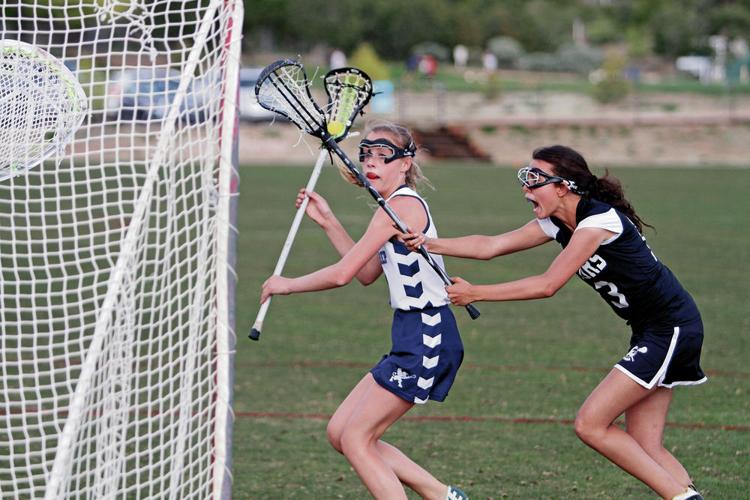
Legal and safe use of the crosse is essential for the minimization of risk to players. It is also critical for the preservation of girls lacrosse as a game which allows players to play with limited protective equipment. While rules writing and officiating play a part in maintaining the integrity of the sport, coaches also play a role. Coaches must teach proper and legal stick skills. Players must not initiate illegal stick-to-body contact by using the stick to hit, push or displace an opponent. Officials must recognize, call and penalize illegal stick-to-body contact as required by the rules. Actions where players use their stick to thrust or shove an opponent’s body in a defenseless position may cause physical harm and requires issuance of a card.
Legal defensive stick positioning is a stick held vertically with the head of the stick above the 10 o’clock and 2 o’clock position. Coaches are encouraged to instruct players to slow or stop an opponent’s progress while remaining in a legal defensive position. Illegal stick-to-body contact occurs when a defender contacts an opponent’s body with a stick held in a horizontal position, regardless of who initiated contact. This is a major foul and should be called by officials. Failure to enforce this rule may encourage cross-checking resulting in unsafe play and increasing the potential for injuries.
The National High School Sports-Related Surveillance Injury Study confirmed that contact with the stick is the primary cause of injury in girls lacrosse. This can result from using the stick to push or hit an opponent, cross-checking or hitting an opponent in any part of the body. When these actions occur, officials must recognize the foul and assess a penalty. Proper coaching, appropriate play, and diligent officiating in regard to legal use of the stick will together minimize risk and maintain the integrity of girls lacrosse.
Dangerous Play in the 8-Meter Arc
There is high potential for dangerous play and injuries within the 8-meter arc. This can occur because of players’ proximity, the speed of players moving into and through the 8-meter arc, aggressive actions by attack players and defenders, and shots being taken. Players can play safely in this area by maintaining control of their stick and body, avoiding illegal stick-to-body contact, shooting safely, and not pushing opponents.
Officials must be in the proper position to effectively officiate play in the 8-meter arc. They must know and concentrate on their area of responsibility. Lead officials focus on the
ball carrier and their defender. Trail officials must be aware of play while focusing off-ball then following the action – shooter and defender immediately after a shot. Many fouls occur immediately before, during and after a shot. Officials must always be watchful for dangerous follow-throughs, dangerous propelling, and dangerous shots that heighten the risk of injury of defenders and goalkeepers.
Controlled and safe play in the 8-meter arc coupled with effective officiating can significantly decrease injuries while maintaining the pace of play and the integrity of the game.


 New Mexico Lacrosse Officials Association
Leave a comment